Strength Training Planner
If you’ve ever scribbled workout notes on a napkin, lost track of reps across three different apps, or stared blankly at a blank journal wondering where to even start—this is for you. The Strength Training Planner isn’t just another printable logbook. It’s a thoughtfully built, ready-to-use system designed for real people who train regularly—and want to stay consistent without drowning in complexity.
Whether you’re logging your first squat or programming for a client’s 12-week transformation, this planner meets you where you are. And it does so in ways that feel intuitive—not like homework.
What It Actually Is (and What It’s Not)
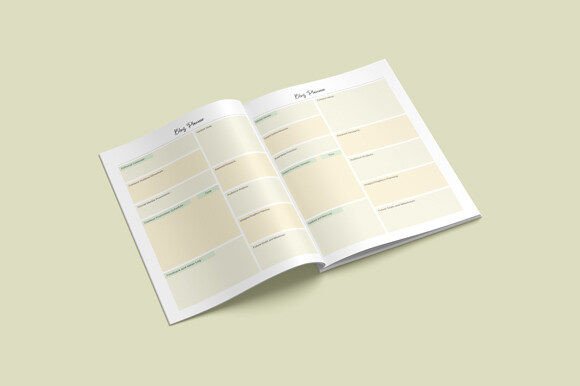
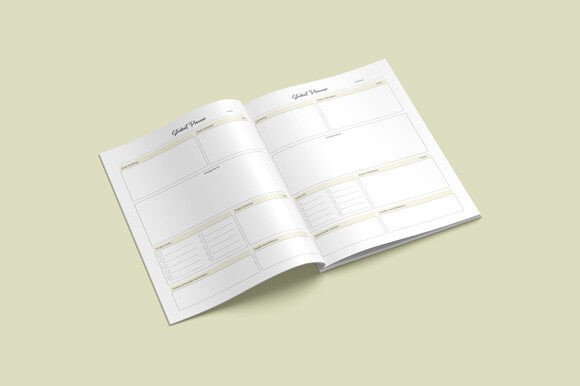
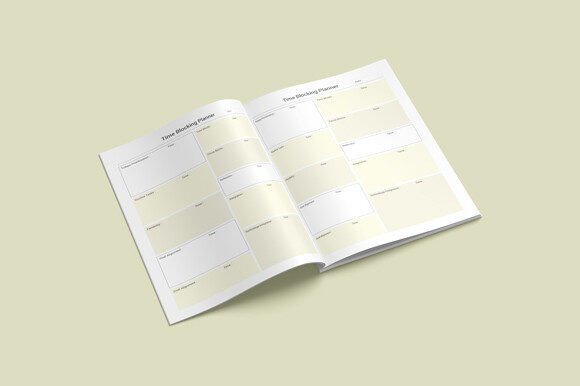
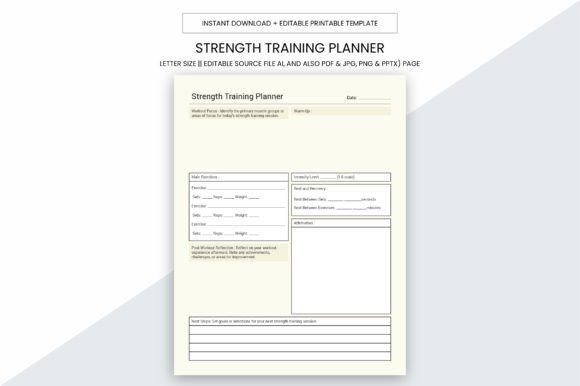
The Strength Training Planner is a 109-page interior file optimized for practical use—not decoration. It’s not a vague motivational journal with inspirational quotes and empty pages. It’s a functional tool: structured but flexible, detailed but uncluttered, thorough but never overwhelming.
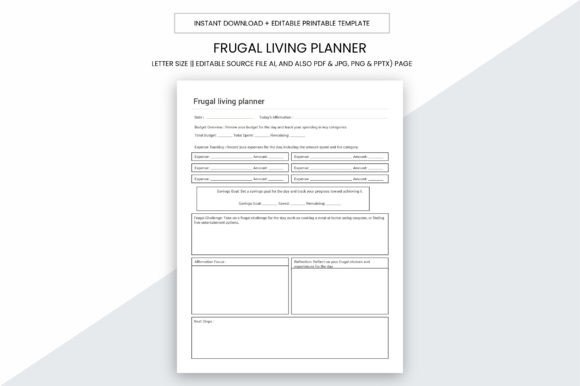
You get one cohesive digital download containing editable source files (Adobe Illustrator), plus high-resolution PDF, JPG, PNG, and PPTX versions—all sized at 8.5 x 11 inches, no bleed, 300 DPI. That means it prints cleanly on standard home printers, local print shops, or directly into Amazon KDP with zero formatting surprises.
Where People Use It—Every Day
Think about how many contexts involve tracking progress, planning effort, and reflecting on results. That’s where the Strength Training Planner quietly becomes indispensable.
- Personal training: You’re building strength after an injury, prepping for a powerlifting meet, or just trying to show up consistently three times a week. The planner helps you record sets, rest times, RPE, mood, energy levels—and spot patterns over time. One user noticed her deadlift stalled every time she trained on less than six hours of sleep. She wouldn’t have seen that without consistent logging.
- Coaching & small studios: A trainer running a hybrid model (in-person + online clients) uses the editable AI file to customize cover pages, add studio branding, and generate clean PDFs for each client. No more copy-pasting into generic templates or juggling mismatched spreadsheets.
- KDP publishing: If you’re building a low-overhead digital product business, this interior is production-ready. Upload the 109-page PDF straight to Kindle Direct Publishing as a “printable strength journal” or bundle it with your own cover design and marketing copy. No design skills needed—just clarity on who’ll benefit most.
- Educators & fitness instructors: A community college kinesiology instructor uses printed copies as part of a lab assignment. Students fill out real workout logs, compare progression strategies, and reflect on adherence challenges—all using the same standardized format.
- Freelancers & remote workers: Your lunch break doubles as your lifting window. You need something fast, portable, and distraction-free. The physical planner removes screen fatigue, eliminates app-switching, and keeps your focus where it belongs: on your breath, your form, your next rep.
Why Size, Format, and Quality Matter More Than You Think
An 8.5 x 11-inch layout isn’t arbitrary. It fits neatly on a desk beside your laptop, slips into a gym bag without folding, and gives enough space to write legibly—even with chalky hands or post-workout fatigue. No bleed means clean edges when printed locally, whether you’re ordering 5 copies for your bootcamp or 500 for wholesale.
The 300 DPI resolution ensures crisp lines, readable fonts, and sharp checkboxes—even when printed on budget paper. You won’t waste ink or time re-printing because text blurred or grids disappeared. And because the source file is editable in Illustrator, you can tweak colors, swap logos, adjust spacing, or translate sections—without starting from scratch.
Realistic Things to Consider Before You Download
This isn’t magic—it’s a tool. Its value multiplies when matched with intention. Ask yourself:
- Do I actually review my logs? A planner only works if you glance back weekly. If you haven’t opened last month’s notebook, consider starting with just 4–6 weeks of focused use—not 109 pages all at once.
- Am I okay with handwriting? This is intentionally analog. There’s no auto-calculating macros or synced wearables. You’ll write, circle, cross out, underline—and that tactile process builds stronger neural connections than tapping on glass.
- Will I protect the file? Since it includes editable AI and multiple formats, keep your master copy secure. Don’t upload source files publicly or share them freely—especially if you’re reselling or branding the content.
- Is consistency more important than customization? Yes, you *can* edit the Illustrator file—but most users find the built-in structure (warm-up prompts, deload reminders, mobility notes, recovery trackers) covers 90% of what they need. Tinkering too much delays actual use.
How It Fits Into Broader Habits—Not Just Workouts
People often overlook how strength training intersects with other life domains. Sleep quality affects recovery. Stress changes perceived exertion. Nutrition timing shifts energy mid-session. The Strength Training Planner includes subtle, non-intrusive fields for those variables—not as rigid trackers, but as gentle prompts. You don’t have to fill them in. But when you do, patterns emerge.
A freelance graphic designer used the “energy level” and “focus rating” columns to realize her best lifts happened on days she’d blocked off uninterrupted morning work time—no emails, no calls. That insight spilled over into how she scheduled creative work, not just workouts.
Another user—a new parent—used the “notes” section not just for sets, but for tiny wins: “Lifted today while baby napped,” “Did mobility drills during tummy time,” “Felt strong even though I only got 4 hours sleep.” Those entries weren’t data points—they were evidence of resilience.
Final Thought: It’s About Showing Up—For Yourself
The Strength Training Planner doesn’t promise faster gains or instant motivation. What it does offer is quiet reliability. A place where progress isn’t measured only in pounds added, but in consistency maintained, adjustments made, and attention paid.
It’s useful whether you’re printing one copy for your home gym, scaling to 500 units for KDP, or handing it to a client who needs structure—not pressure. It works because it respects your time, your goals, and your reality.
So if you’re tired of fragmented tracking, inconsistent follow-through, or tools that demand more than they give—this isn’t just another planner. It’s the version you keep coming back to.