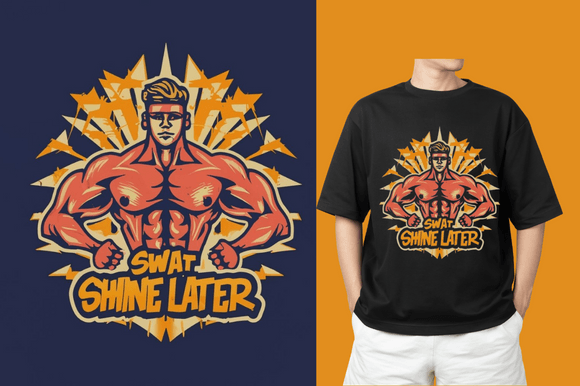
T-Shirt Design
T-shirt design refers to the creation of visual artwork intended for printing or cutting onto apparel—most commonly cotton or blended fabric tees. At its core, it combines typography, illustration, layout, and color theory to produce graphics that communicate identity, message, or aesthetic intent. Typography-based T-shirt design specifically emphasizes letterforms as the primary visual element: fonts become structure, rhythm, and expression—not just text. These designs often rely on kerning, weight contrast, spacing, and stylistic flourishes to create impact without imagery.
People explore T-shirt design for varied reasons. Some seek ready-made digital files to launch or expand a print-on-demand store with minimal overhead. Others need adaptable assets for personal projects—custom invitations, monograms for weddings, or themed merchandise for community events. Educators, crafters, and small-business owners may look for scalable vector resources compatible with cutting machines (like Cricut or Silhouette) or professional printing workflows. The appeal lies in flexibility: one file can serve multiple outputs—t-shirts, mugs, tote bags, wall art—if sourced correctly.
A key benefit of purchasing typography-focused T-shirt design digital files is consistency across applications. Vector formats—including SVG, EPS, AI, and PDF—retain crispness at any size, making them ideal for both small embroidery patches and large-format signage. Files delivered in CMYK at 300 DPI align with industry printing standards, reducing color-shift surprises during production. PNG versions offer transparency support for layered mockups or web use, while editable layers in AI or EPS allow targeted adjustments—changing a single letter’s color, adjusting line weight, or repositioning elements without pixelation.
However, tradeoffs exist. Not all typography designs are equally versatile. A highly stylized script font may not scale well for small chest prints or vinyl application. Similarly, intricate kerning or overlapping characters may complicate cut-file preparation for heat-transfer vinyl. Users must verify whether the design includes outlined text (essential for compatibility across software) or live fonts (which require licensing and may not render identically on other systems). Also, “100% original” claims should be evaluated: while the arrangement may be unique, individual typefaces may be subject to commercial-use restrictions unless explicitly licensed for resale or derivative work.
Consider your technical comfort level. If you plan to modify files yourself, familiarity with Adobe Illustrator or Inkscape helps maximize utility—especially when recoloring, resizing, or separating layers for multi-color screen printing. Beginners may prefer designs with pre-separated color layers or simplified paths. Those using automated POD platforms (like Printful or Teespring) should confirm file compatibility: some services accept only PNG or SVG, while others require flattened PDFs or specific bleed margins.
This type of T-shirt design is a strong fit when you need production-ready assets quickly and value precision over bespoke creation. It suits entrepreneurs launching seasonal collections, educators preparing classroom materials, or individuals commemorating milestones—birthdays, graduations, anniversaries—with coordinated apparel and paper goods. Because typography designs translate cleanly to cards, decals, and signage, they support cohesive branding across physical touchpoints without requiring separate illustrations for each medium.
Alternatives may be preferable in certain cases. Custom commissioning offers full creative control and ensures exclusivity—critical for established brands protecting visual identity. For complex illustrations or photorealistic graphics, raster-based workflows (with high-res PSD or TIFF files) may better preserve texture and depth than vector-only packages. Likewise, if your goal is rapid iteration—testing dozens of slogans or layouts—cloud-based design tools (Canva, Kittl) with built-in typography libraries provide faster experimentation than importing and editing static vector files.
Before acquiring T-shirt design files, assess your intended output method. Screen printing benefits from clean vector paths and limited color palettes; direct-to-garment (DTG) printing tolerates more gradients and fine detail but requires RGB-optimized PNGs. Heat-transfer vinyl demands simplified, closed-path vectors with no overlapping strokes—check whether included SVG files are optimized for cutting machines or merely display-oriented. Review file contents carefully: a “bundle” labeled “typography design” might contain only decorative fonts without layout guidance, whereas others include balanced compositions with intentional negative space and hierarchy.
Also consider scalability beyond t-shirts. If you anticipate using designs for mugs or tea towels, verify that proportions remain legible at different aspect ratios. A tall, narrow monogram may not center well on a round mug base, while wide banners risk truncation on standard shirt widths. Look for packages offering multiple layout variants—or at least clear bounding box dimensions—to avoid unexpected cropping during production.
Finally, evaluate licensing terms transparently. Most digital marketplaces grant personal and commercial use, but restrictions often apply to resale of unmodified files or use in subscription-based design services. If your business model relies on bundling these assets into larger kits (e.g., “wedding suite bundles”), ensure the license permits redistribution—even if modified. When in doubt, contact the seller directly for clarification rather than assuming permissions.
In summary, typography-based T-shirt design digital files offer practical advantages for users prioritizing efficiency, cross-medium adaptability, and print fidelity. They are most effective when matched to realistic technical capabilities and clearly defined use cases. Evaluating format compatibility, scalability, licensing scope, and design integrity—not just aesthetics—helps determine whether a given set meets your functional needs. For those balancing time, budget, and quality requirements, these files represent a pragmatic starting point—not a universal solution, but a viable tool within a broader creative workflow.