Jasmine Flowers Coloring Pages for KDP: A Scalable Vector Asset System for Creative Entrepreneurs
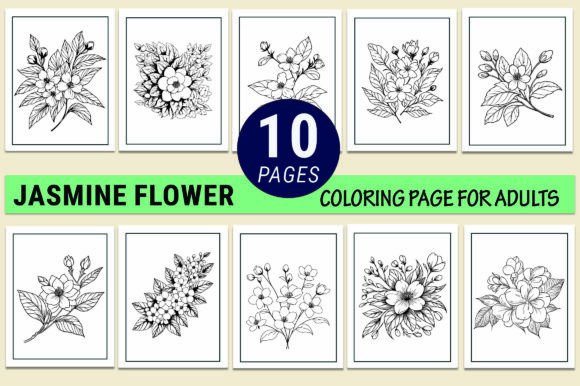
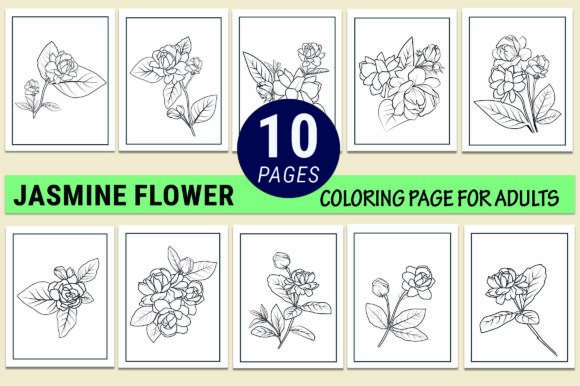
At its core, Jasmine Flowers Coloring Pages for KDP is not just a collection of floral line art—it’s a production-ready, multi-format vector asset system engineered for creators who operate at the intersection of design, digital commerce, and scalable content creation. Designed in Adobe Illustrator and delivered as an organized ZIP package, this digital printable Jasmine coloring book interior offers 10 unique jasmine-themed illustrations—each precisely sized to 8.5×11 inches—and exported across seven industry-standard file types: AI, PDF, EPS, DXF, PNG, SVG, and JPG. This isn’t a static PDF download; it’s a flexible creative infrastructure built for adaptation, iteration, and commercial reuse.
A Response to the Converging Demands of Digital Creativity and Print-on-Demand Commerce
The rise of platforms like Amazon KDP has democratized publishing—but it has also intensified expectations around speed, precision, and versatility. Today’s successful KDP creators don’t just upload files; they manage version-controlled assets, maintain brand consistency across product lines, and rapidly repurpose core designs for new markets. That’s where Jasmine Flowers Coloring Pages for KDP delivers tangible strategic value. Each illustration is constructed with clean, closed vector paths, optimized stroke weights, and intentional negative space—ensuring crisp rendering whether printed on matte paper or scaled for sublimation on ceramic mugs. Unlike raster-heavy coloring books that degrade when resized, these vector-native files retain fidelity at any dimension, supporting everything from pocket-sized greeting cards to wall-mounted textile prints.
Why Vector-First Design Is Now a Business Necessity
Consider the workflow of a freelance surface pattern designer launching a botanical-themed merchandise line. With traditional coloring page downloads, she’d be limited to a single PDF—locked into fixed resolution, uneditable layers, and no path-level control. But with the Jasmine Flowers Coloring Pages for KDP package, she opens the AI file, isolates petal clusters using the Layers panel, recolors stems in Pantone 14-0740 TCX (a trending sage green), and exports a new SVG for a Shopify sticker shop—all within 12 minutes. The inclusion of DXF files means she can cut jasmine motifs directly on a Cricut Maker for custom iron-on transfers. The EPS exports integrate seamlessly into Adobe InDesign layouts for premium hardcover editions. This level of interoperability reflects a broader shift: professional creators no longer treat “file formats” as technical footnotes—they treat them as operational levers.
Beyond Coloring Books: The Expanding Utility of Purpose-Built Line Art
While marketed as a KDP interior solution, the real utility of this collection lies in its intentional cross-platform readiness. The 10 high-contrast, single-line jasmine illustrations were conceived not only for relaxation-focused adult coloring but as foundational motifs for diversified revenue streams:
- Home & Lifestyle Products: The SVG and PNG files scale cleanly for embroidery digitizing (pillows, duvet covers) and direct-to-garment t-shirt printing—no manual redrawing needed.
- Greeting & Stationery Markets: PDF exports include bleed-safe margins and CMYK-ready color profiles, enabling one-click uploads to print providers like CatPrint or MOO for boutique greeting card lines.
- Digital Product Ecosystems: The AI and EPS files serve as editable base layers for Canva templates, Notion dashboards, or Procreate brush sets—extending reach into digital wellness and planner communities.
- Sublimation & Craft Businesses: DXF and SVG support precise laser cutting and heat press alignment—critical for crafters producing jasmine-embossed leather journals or resin-coated coasters.
This isn’t speculative versatility. It’s baked into the production pipeline: each file type was generated using non-destructive Illustrator workflows, preserving editable text, grouped elements, and layer naming conventions that align with industry best practices (e.g., “Stem_Stroke,” “Petals_Fill_Off”). That discipline enables repeatable customization—essential when managing seasonal collections or client-specific adaptations.
Meeting Evolving Consumer Expectations with Intentional Simplicity
Consumers today don’t just want coloring pages—they want context-aware creativity. They seek designs that feel both timeless and contemporary, botanical but not clichéd, intricate without being overwhelming. Jasmine—a flower associated with purity, grace, and quiet resilience—resonates across demographics: it appears in South Asian wedding motifs, Mediterranean textile traditions, and modern Scandinavian minimalism. These illustrations honor that cultural range through balanced composition: open centers invite personal interpretation, while vine structures provide subtle rhythm and flow—ideal for mindfulness-based engagement.
More importantly, the line work avoids over-engineered detail. Stroke widths remain consistent between 0.75–1.25 pt, ensuring legibility even when printed on budget-grade newsprint or traced with children’s markers. That restraint isn’t aesthetic compromise—it’s accessibility engineering. It allows educators to use the PNG files in Google Slides for virtual art lessons, therapists to adapt motifs for fine-motor skill development, and indie stationers to overlay soft watercolor textures without visual noise.
Integration Into Modern Creative Workflows: From Concept to Commercialization
For professionals building scalable creative businesses, file flexibility translates directly into time savings and reduced technical debt. A marketer launching a “Botanical Wellness” subscription box can:
- Import the SVG into Figma to build an animated social media carousel highlighting individual jasmine blooms;
- Use the PDFs to generate print-ready inserts for physical kits;
- Leverage the JPG exports for Instagram Story backgrounds and email header graphics;
- Convert the DXF files into CNC-cut wooden ornaments for limited-edition bundles.
No third-party conversion tools. No risk of path corruption. No licensing ambiguity—these are original, commercially licensed assets designed explicitly for derivative use. That clarity matters. As platform policies tighten around AI-generated content and stock asset reuse, owning a purpose-built, vector-native collection like Jasmine Flowers Coloring Pages for KDP provides legal and creative insulation.
Future-Proofing Through Format Intelligence
The ZIP structure itself signals intentionality. Rather than bundling redundant files, it groups assets by functional use case: AI/EPS for professional editing, PDF for KDP compliance, SVG/DXF for makers, PNG/JPG for web and social. This mirrors how leading creative studios organize internal asset libraries—not by format alone, but by intended output channel. As new technologies emerge—think AR-enabled coloring apps or generative fill plugins that augment line art—the vector foundation ensures backward compatibility. A designer won’t need to retrace jasmine blossoms for a new AI tool; she’ll feed the native AI file into the pipeline and retain full control over stroke behavior and grouping logic.
In essence, this isn’t a “coloring book”—it’s a modular design system. It responds to the growing expectation that creative assets must be simultaneously human-centered (calming, intuitive, culturally resonant) and machine-ready (structured, tagged, interoperable). As digital craftsmanship matures, the distinction between “content” and “infrastructure” continues to blur. Collections like Jasmine Flowers Coloring Pages for KDP sit squarely at that convergence—equipping creators not just to publish, but to iterate, diversify, and lead.
Whether you’re scaling a KDP coloring empire, launching a botanical lifestyle brand, or building a portfolio of licensable surface patterns, the value isn’t in the 10 illustrations alone—it’s in the deliberate architecture behind them. Every format serves a documented purpose. Every vector path anticipates reuse. And every jasmine bloom represents a node in a larger, more agile creative economy—one where precision, permission, and practicality are no longer optional.